
Indonesia's vast archipelago is home to the world's largest tuna catch. Accounting for around 19.1% of global production, tuna supports Indonesia's food security, national income and livelihoods. Yet, despite their importance, the science guiding tropical tuna fishery management has often relied on data from other regions. These do not always reflect Indonesia's tropical environments, fishing fleets or stock dynamics.
An ACIAR-supported small research activity led by CSIRO is strengthening Indonesia's capacity to generate and use its own scientific information on how tropical tuna species in the Indonesian waters grow and reproduce, while building national expertise to lead this work independently. The research activity complements Indonesia's ongoing implementation of its harvest strategy for tropical tuna in archipelagic waters and aligns with the country's blue economy policy, which aims to grow the economy responsibly while protecting marine ecosystems and supporting coastal communities.
Improving data for better decisions
Building on long-standing collaboration between Australian scientists and Indonesian research institutions, the research activity focuses on improving the quality of biological data and ensuring these insights inform fisheries management decisions.
Improved biological data strengthens the foundation of harvest strategies, which guide how much fishing is allowed, the types of gear that can be used and when or where fishing should be limited to help protect fish stocks over the long term. By improving the reliability of key information, such as catch rates and fish size, the research activity helps address challenges in monitoring and data collection, supports more credible fisheries management and reduces uncertainty in decision-making.
'This collaboration reflects ACIAR's long-standing commitment to working alongside partner countries on shared challenges,' said Dr Jennifer Blair, ACIAR Research Program Manager, Fisheries. 'Supporting Indonesian researchers to generate their own data and apply it in fisheries management helps build stronger, more sustainable outcomes across the region.'
Building capability and confidence
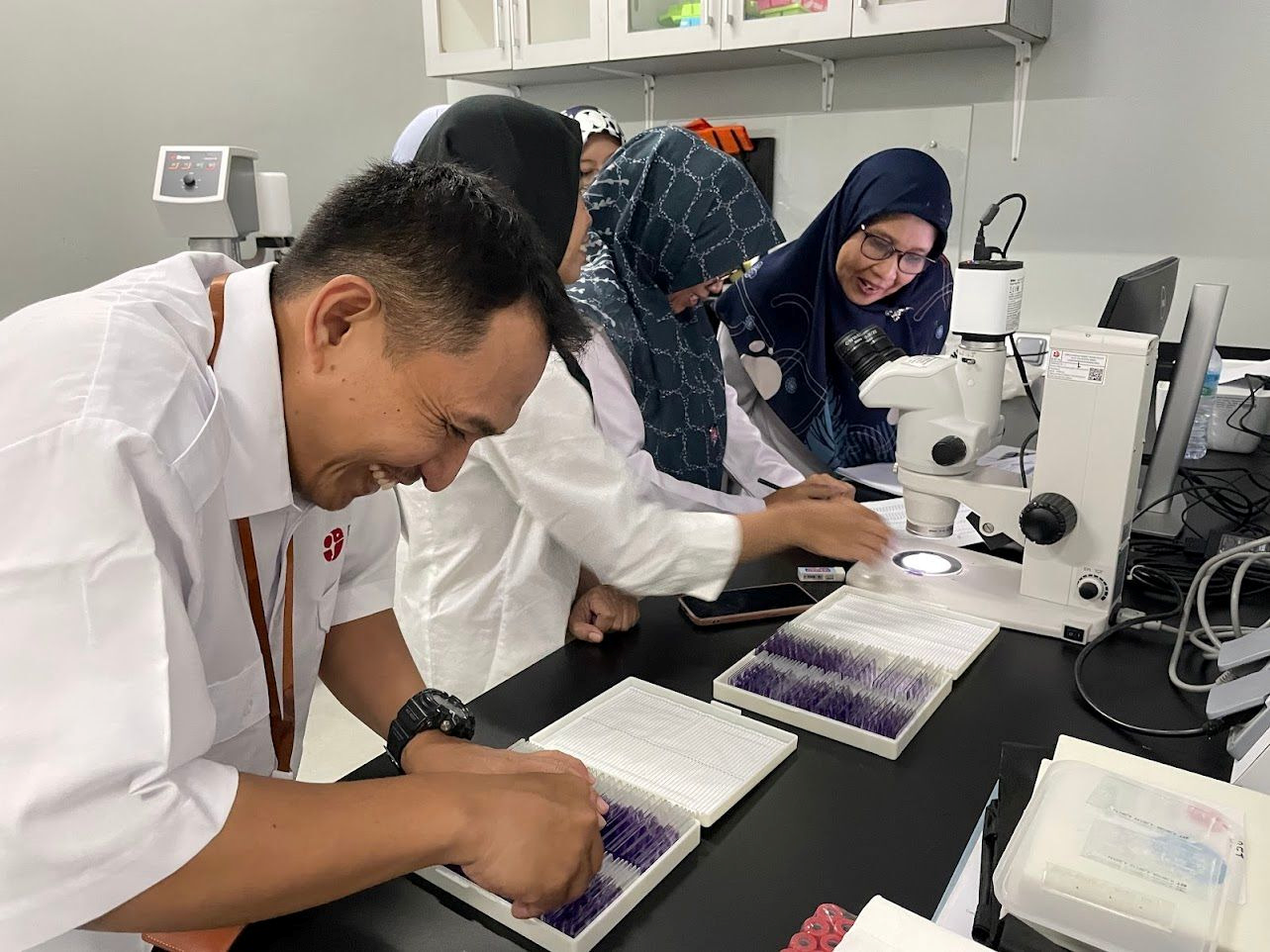
Capacity building and local stewardship are central to the research activity. Indonesian scientists are gaining new skills and confidence through a series of workshops and training in population biology techniques, including tuna reproductive analysis. The research activity has also produced practical protocols and manuals, which are now being used by Indonesian researchers to support ongoing and future work.
'For Indonesia, national tuna fisheries data is fundamental,' said Dr Fayakun Satria from the National Research and Innovation Agency (BRIN). 'It strengthens confidence in the development monitoring indicators used for management and ensures that harvest strategies are suited to Indonesian fisheries, rather than adapted from elsewhere.'
Indonesian scientists are also increasingly coordinating workshops, managing biological samples and troubleshooting laboratory challenges, reflecting a growing sense of ownership and leadership.
'This research activity is addressing data gaps and ensuring Indonesia's harvest strategies are based on biological information that truly reflects conditions in its own waters,' said Project Leader Dr Campbell Davies from CSIRO. 'We are seeing Indonesian scientists apply these methods with growing confidence, which means the expertise is now embedded locally.'
With the research activity ongoing, further training, analysis and results are expected. As the work continues, more anecdotes will follow, highlighting how improved data and local expertise are strengthening Indonesia's tuna fisheries for the long term.
Learn more about ACIAR's recently completed project here: Increasing capacity in population biology and harvest strategy implementation for sustainable tuna fishing and food security in Indonesia | ACIAR


