
As HUSKY D rules change, UConn Health is reaching patients directly and working with community partners to help Connecticut residents understand what the changes mean for them and where to turn for help.
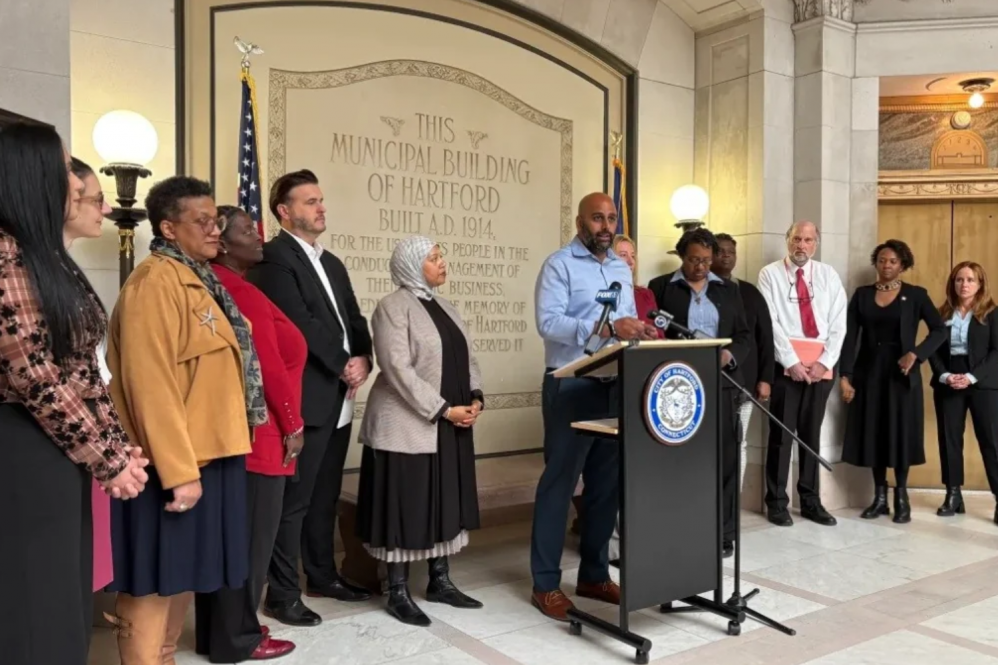
Mayor Arunan Arulampalam announced the launch of the Hartford HUSKY D Response Coalition at a press conference on Wednesday, Oct. 28, 2026. Credit: Sandy Battulga / CT Mirror
A letter in the mail, a message in MyChart or a conversation at a neighborhood health center may be how someone first learns that Connecticut's Medicaid rules are changing. What happens next matters just as much. Does the person know whether the rules apply to them, what they may need to do and who can help them through the process?
UConn Health is working with the Hartford HUSKY D Response Coalition to help residents answer those questions. The coalition brings together hospitals, community health centers, city and state agencies, nonprofit organizations, faith-based organizations and workforce partners to help people understand the changes and avoid gaps in coverage.

"What does hospital and community readiness look like through the lens of UConn Health and the people we serve?" said Dr. Jeffery Hines vice president, Office of Inclusion and Civil Rights of University of Connecticut and UConn Health and serves as co-chair of the Hartford Coalition. "Hartford-area residents often receive care from more than one health system. That makes it important for hospitals to coordinate with one another and with the organizations residents already turn to for help," he said.
New federal work and community engagement rules for certain adults enrolled in HUSKY D take effect Jan. 1, 2027. Depending on their circumstances, members may need to show that they meet the requirements or qualify for an exemption. HUSKY D members will also need to renew their coverage every six months. The Connecticut Department of Social Services provides guidance on how the rules apply and when members may need to act.
At UConn Health, a group led by the Office of Inclusion and Civil Rights has been preparing for the changes since October 2025. UConn Health has sent more than 5,200 mailed letters, more than 5,200 emails and nearly 15,900 MyChart messages explaining the changes and where to find help. Using several channels helps UConn Health reach where they are.

"Awareness is one piece of it," said Antoinette Schoenthaler, assistant vice president for Inclusion and Health Equity of UConn Health and serves on the steering committee for the Hartford Coalition. She said the next step is helping people figure out where to turn, whether they have questions about a notice from the state, need to understand an exemption or want help navigating the renewal process. UConn Health is also working with hospital and outpatient leaders to give care teams resources they can share when patients bring those questions to a visit.
The coalition extends that work beyond UConn Health's own patients. Community and faith-based partners can share information through relationships they already have with residents. Organizations such as Capital Workforce Partners and the United Way can help connect people with job training and volunteer opportunities. Federally qualified health centers can help residents access care, including those who are uninsured or underinsured. UConn Health is also working with the Department of Social Services and the Connecticut Hospital Association to help make sure people hear consistent information wherever they ask for help.
Hines said the Hartford effort has shown how quickly organizations can come together around a shared responsibility. "It was wonderful for UConn Health to be a visible member of that coalition," he said, pointing to UConn Health's role as a safety-net provider for the state. Keeping people connected to coverage can also help them stay connected to routine care and get treatment before a health problem becomes urgent.
On November 16, Governor Lamont and the Connecticut Department of Social Services announcement that Connecticut will participate in the six-month hold-harmless period offered by CMS, as announced on November 13, as the new federal HUSKY D work requirements take effect. The hold-harmless period will run from January 1 through June 30, 2027. During this period, HUSKY D recipients who are otherwise eligible will not lose Medicaid coverage solely because they do not meet the new work requirements. Connecticut intends to use the additional time to strengthen implementation systems and processes and to educate the members about the new requirements.
The federal work requirements still take effect January 1, 2027.
This additional six-month period is an important opportunity to help eligible HUSKY D recipients maintain coverage while the state implements these significant changes. WE will continue to share updates and coordinate outreach as additional guidance and implementation details become available.
HUSKY D members can prepare by updating their contact information through Access Health CT and watching for notices from the Department of Social Services. UConn Health's HUSKY D resource page links to the state's screening tool, which can help members understand whether the work rules may apply to them. Patients with questions can call UConn Health at 860-679-4120.


