
Moonlight determines when the red-necked nightjar feeds, migrates and raises its young. A groundbreaking long-term study from Lund University shows how the migratory bird's entire annual cycle follows the moon's rhythm.
"… the lovely, melancholy moonlight, which makes the birds dream in the trees…"
The French poet Paul Verlaine was seemingly wrong in his famous poem Clair de Lune. Moonlight does not make the birds dream up in the treetops - quite the opposite.
In a new study, researchers have investigated how the moon affects the red-necked nightjar - a bird with a tapping "kjotok-kjotok" call that breeds in southern Europe and spends winters in West Africa. The research shows that the nightjar literally lives off the moon's light. When the moon is full, the bird can hunt insects for much of the night. When it is dark, it is instead forced to rely on brief hunting opportunities at dusk and dawn.
"Unlike bats, the nightjar lacks the ability to navigate effectively in total darkness. This is an animal that lives with small margins. Without moonlight, the energy balance simply doesn't add up," says Anders Hedenström, professor of biology at Lund University.
The study is based on over ten years of fieldwork in Doñana National Park in Spain, where researchers have tracked the birds using advanced multi-sensor data loggers developed in Lund. The technology has made it possible to measure flight activity, body temperature and behaviour around the clock, all year round - and link the changes directly to the phases of the moon, which follow a 29-day cycle.
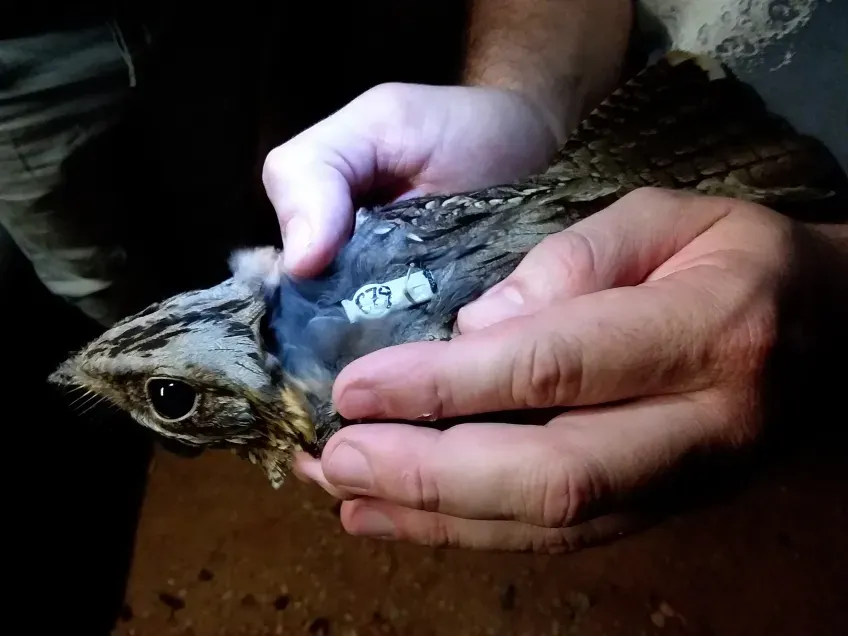
When the light disappears, the birds are forced to slow down. They sit still for long periods and conserve energy by lowering their body temperature, a temporary hibernation strategy that is otherwise uncommon in birds.
"The most surprising thing was how clearly the dark nights trigger this energy-saving strategy. They shut down regularly every month," says Gabriel Norevik, biology researcher at Lund University.
However, when the full moon returns, conditions change quickly. Food intake increases, energy reserves are built up, and the birds can begin to prepare for the next demanding phase of their lives. The spring migration from Africa, for example, only begins when the energy balance allows it - usually around two weeks after the full moon.
Light pollution a threat to the life cycle of animals
The moon's rhythm also governs breeding. Eggs are laid so that the chicks hatch when the supply of nocturnal insects is at its peak, maximising their chances of survival during the first critical weeks.
The results show how vulnerable nocturnal animals are to changes in the light environment, not least in a world of increasing light pollution and climate change. Even small changes in light levels can have major consequences for species already living close to their energy limit.
"The next step is to understand how artificial light affects these systems. If we alter the night-time light, we risk disrupting their entire life cycle. This knowledge is vital when it comes to implementing conservation measures," Anders Hedenström concludes.
Publication:
Link to the article in Science Advances:
Moonlight drives the energy balance and annual cycle of a nocturnal forager


